
Strategic Value from Existing Waste
PFA Resources recovers critical minerals from a waste stream that already exists, above ground, at known sites. That puts us where three UK priorities meet: secure critical mineral supply, a circular economy, and lower-carbon industry.
Aligned with the UK Critical Minerals Strategy
The government's Vision 2035 strategy, published in November 2025, sets three targets for 2035: at least 10% of UK critical mineral demand met from domestic production, 20% from recycling, and no more than 60% of any mineral from a single country.
Recycling and the circular economy. Recovering minerals from legacy industrial waste sits squarely in the strategy's recycling pillar, and avoids the mineral-rights and permitting hurdles that slow new UK mines.
The right minerals. Gallium and the rare earths are named UK critical minerals, and scandium, hafnium, rubidium, yttrium and zirconium are all on the US critical minerals list.
Breaking single-country dependence. Supply and processing of gallium, scandium, rubidium and rare earths is concentrated in China, and in Russia for scandium. A UK source directly serves the 60% cap.
The right stage for public support. Our proposed strategy's £50 million programme, alongside possible National Wealth Fund and UK Export Finance support, targets projects moving from laboratory to pilot and first-of-a-kind plants. That is exactly where we are.
Decarbonisation
Carbon kept, not burned. In the cement route, unburnt carbon left in the ash is combusted in the kiln. We recover it as a clean carbon product and upgrade it to activated carbon.
Shorter supply chains. Aluminium sulphate made from UK ash replaces product made from bauxite that is mined, refined and shipped from overseas.
A low-energy process. Our leach avoids the high temperatures of smelting, while unused acid and other reagents are recovered and recycled back into the process.
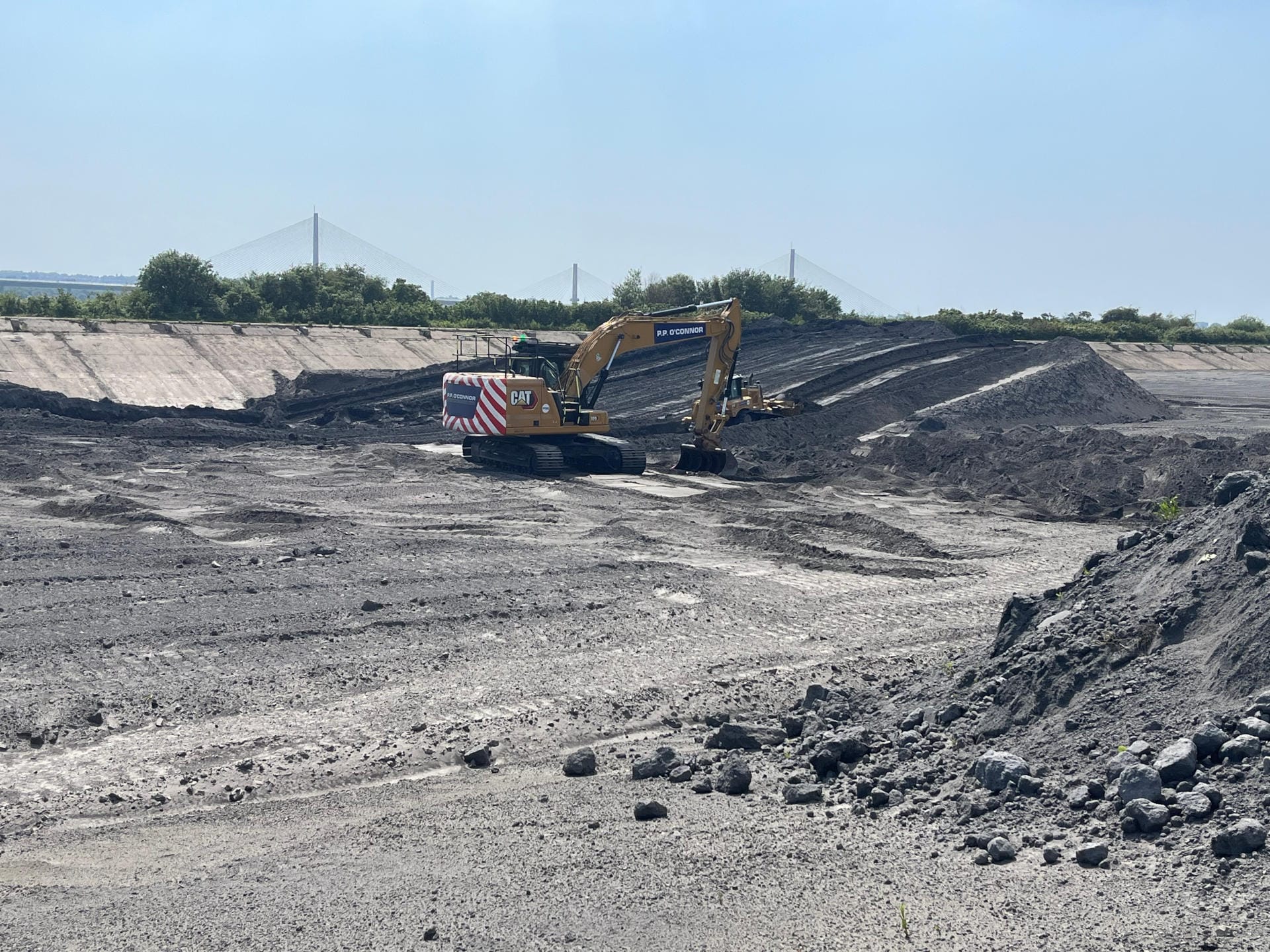
Land restored. Clearing ash lagoons and landfills removes dust and water-management liabilities and frees land for restoration or redevelopment.
Complementary to cement. Where ash is best suited to cement blending, it should go there. Our process targets the value the cement route leaves behind.
Supply-Chain Security and Defence
The UK imports almost all the critical minerals its advanced manufacturing, clean energy and defence industries depend on, and the government now treats critical minerals as a foundational sector of its Industrial Strategy. Our products feed directly into that base:
- Gallium: semiconductors for radar and secure communications
- Hafnium: jet-engine superalloys and nuclear reactor control rods
- Rubidium: atomic clocks for GPS-resilient positioning, navigation and timing, and quantum technologies
- Neodymium, praseodymium, dysprosium: permanent magnets for electric drives, wind turbines and defence systems
- Activated carbon: filtration for water treatment and protective equipment
Take the Next Step
Learn more about the investment opportunity or contact our team to discuss investment, partnership or collaboration opportunities.